Backyard Office Insulation Guide: What Matters After the Shell

Backyard Office Guide

By Backyard Office Guide Editorial Team

Backyard Office Insulation Guide: What Matters After the Shell

How to judge backyard office insulation claims, including wall, roof, floor, glazing, air sealing, HVAC sizing, and why R-value alone does not make a room comfortable.

Site Work

Quick answer: A backyard office needs insulated walls, roof, floor, decent glazing, air sealing, and right-sized heating and cooling. A big wall R-value does not fix a thin floor, leaky door, or oversized glass wall.

Best for

Buyers comparing office pods, kits, and shed conversions for year-round use.

Wrong fit

Buyers building a conditioned ADU under full residential energy code.

Tradeoff

More glass looks better in renderings, but smaller glass and better air sealing usually feel better in January and August.

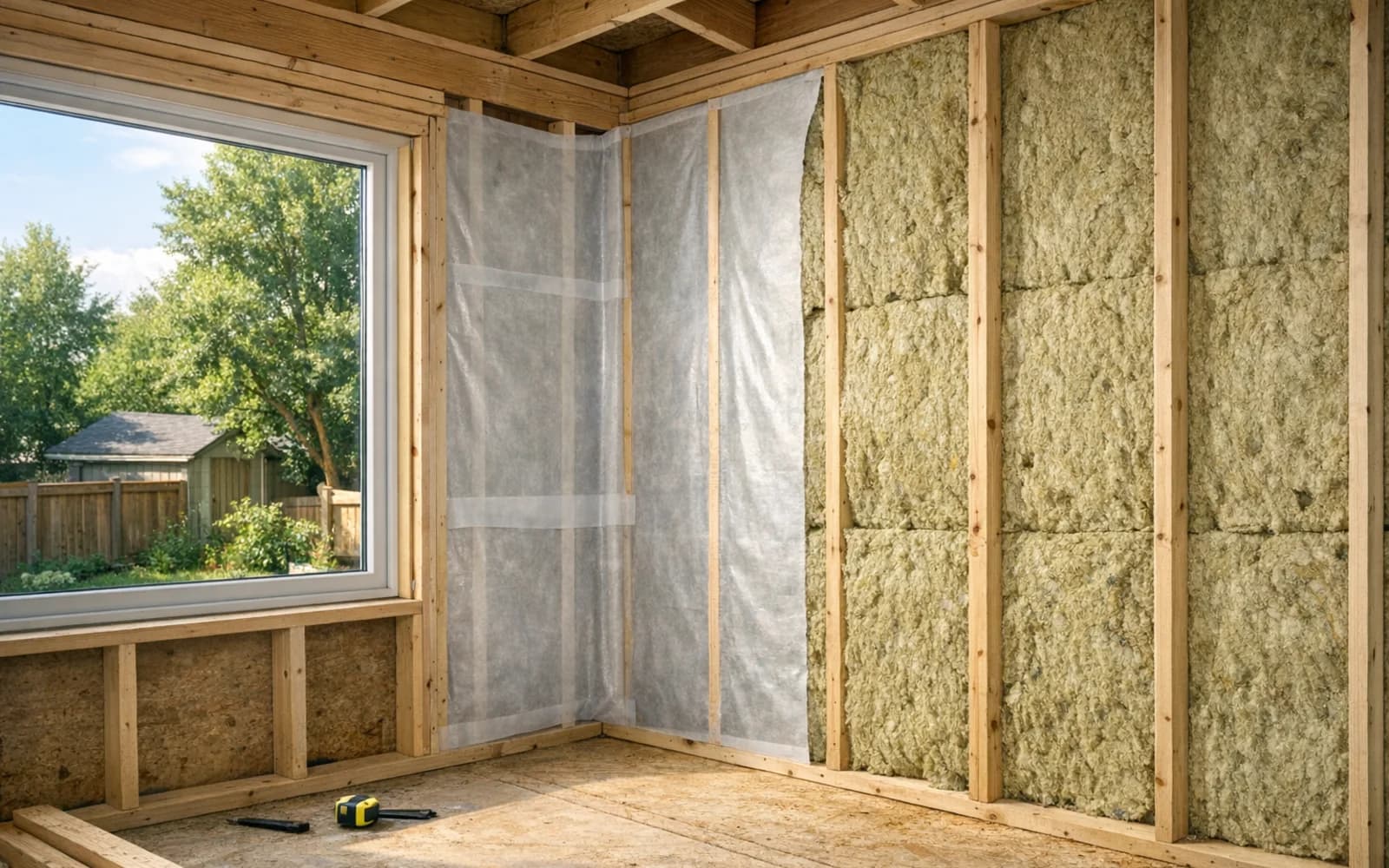
A backyard office is not comfortable because the brochure says "insulated." It is comfortable when the whole envelope works together: walls, roof, floor, windows, door, air sealing, shade, and HVAC.

The insulation number matters. It is not the whole answer.

Quick Answer

For a year-round backyard office, ask for insulation details by assembly, not one blended claim. You want wall, roof, floor, glazing, door, air-sealing, and HVAC details. If the seller only gives a wall R-value, the quote is missing the parts that decide comfort.

The five insulation questions to ask

QuestionWhat a good answer includes
What are the wall, roof, and floor R-values?Separate numbers for each assembly
What type of glazing is used?Double pane at minimum for most climates
Is the floor insulated?Especially important on pier, skid, and shed bases
How is air leakage controlled?Door seals, window seals, panel joints, penetrations
What HVAC load is assumed?Mini-split sizing tied to climate and room size

The floor is where cheap conversions lose comfort

Many shed conversions start with a decent wall plan and a weak floor plan. If the floor sits over cold air or damp ground, your feet feel it first. A warm wall does not fix a cold floor.

Ask whether floor insulation is included, whether it is protected from moisture and pests, and whether the foundation leaves the floor exposed to outdoor air.

Glass is the tradeoff

Big glass sells the office. It also increases heat loss in winter and heat gain in summer. That does not mean you should avoid windows. It means you should treat giant glass walls as a comfort and HVAC decision, not only a design decision.

If the office faces west or south in a hot climate, shade and glazing quality matter as much as wall insulation.

HVAC still has to do the work

Insulation slows heat movement. It does not create heat or cooling. A year-round office usually needs a mini-split or another permanent HVAC plan. Portable heaters and fans are stopgaps, not a real comfort system for daily work.

A tiny room can also be over-conditioned. Ask how the HVAC unit is sized and where the indoor head, outdoor condenser, drain line, and power are placed.

Frequently Asked Questions

Is a backyard office usable in winter?

Yes, if the floor, walls, roof, door, windows, and HVAC are planned together. A thin shed shell with a space heater is not the same thing.

What R-value should I look for?

There is no one honest number without climate and assembly details. Ask for separate wall, roof, and floor values, then compare them to your local expectations.

Are glass office pods cold?

They can be. Good glazing, shade, sealing, and HVAC can make glass-heavy pods work. The tradeoff is usually cost and energy use.

Is spray foam required?

No. Fiberglass, mineral wool, rigid foam, and spray foam can all work when installed correctly. The assembly and air sealing matter more than the label.

Sources

Methodology

These guides are built from manufacturer documentation, public specifications, primary research where health claims matter, and repeated buyer questions that show up in real ownership and installation decisions.

Manufacturer responses can clarify pricing bands, warranty terms, support footprint, or common mistakes. They do not move a page up the shortlist on their own.

Written by Backyard Office Guide Editorial TeamReviewed by Backyard Office Guide Editorial Team, Editorial review on July 6, 2026How we reviewEditorial policy

Next Step

What to do next

Use one of these three paths. They are here to move the decision forward, not add more noise.

Want the full buyer path in your inbox? We send the short version.

Related Guides